Hukins Hops is a 5th generation family farm in Kent. Our farm is carbon-negative, and we focus on practical farming methods that reduce our environmental impact while helping us grow high quality hops for our garlands. Our approach is rooted in regenerative agriculture, with simple systems that support soil health, reduce inputs and keep the farm working efficiently. One of the clearest examples is bringing sheep into the hop gardens.
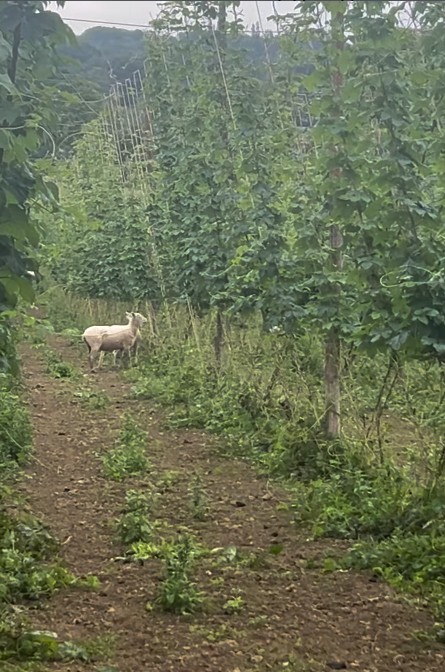
The sheep help us manage the land naturally. Through rotational grazing, they move through the hop gardens pruning lower growth, grazing weeds and helping us maintain chemical free weed control in a practical way. That means less reliance on sprays and fewer passes with machinery. It is a straightforward system that supports healthier hop gardens, stronger soil health and low-impact farming.
These sheep also serve as a natural, low-impact alternative to heavy machinery and synthetic interventions. By grazing the alleys between the towering hop bines, they act as a natural weed killer and support natural pest control by reducing the dense lower growth where problems can build up. This helps us cut diesel use, improve the condition of the land and keep our environmental impact down. It is a practical approach that honors our heritage while protecting our future, and it is one of the reasons every hop garland begins its life in a system designed to tread lightly on the land.
The Art of Natural Pruning and Disease Prevention
One of the most pivotal roles our sheep play is the “bottoming out” of the hop bines. Hops are vigorous climbers, but the dense foliage at the base can become a breeding ground for trouble. Our sheep naturally prune the lower leaves, a task that would otherwise require intensive machinery work and chemical sprays.
This natural pruning is essential for several reasons:

- Improved Airflow: By clearing the base of the plants, the sheep allow the breeze to circulate freely. This is a sublime natural defense against downy mildew, a fungal disease that thrives in stagnant, humid conditions.
- Pest Management: The removal of lower foliage disrupts the habitat for aphids, reducing the need for chemical pesticides.
- Nutrient Cycling: As they graze, the sheep Indulge in the lush greenery and return nutrients to the soil in the form of organic manure, fostering a refined and healthy soil microbiome.
Why Carbon Negative Matters
Being a carbon-negative farm means we are sequestering more carbon into our soil and biomass than we emit through our operations. Each hop garland from our farm is a more sustainable choice for customers who care about provenance as much as presentation. This isn’t just a badge of honor; it is a fundamental shift in how we view our responsibility to the land.
When you choose a Hukins Hops garland, you aren’t just buying a decoration; you are supporting a refined ecosystem. Our values are rooted in the belief that premium quality should never come at the expense of the environment. The exquisite vibrant green of our hop garlands is a direct reflection of the health of the soil they grew in. In other words, the hop garland may steal the spotlight, but the farm does the heavy lifting, with only a little help from some very enthusiastic sheep.